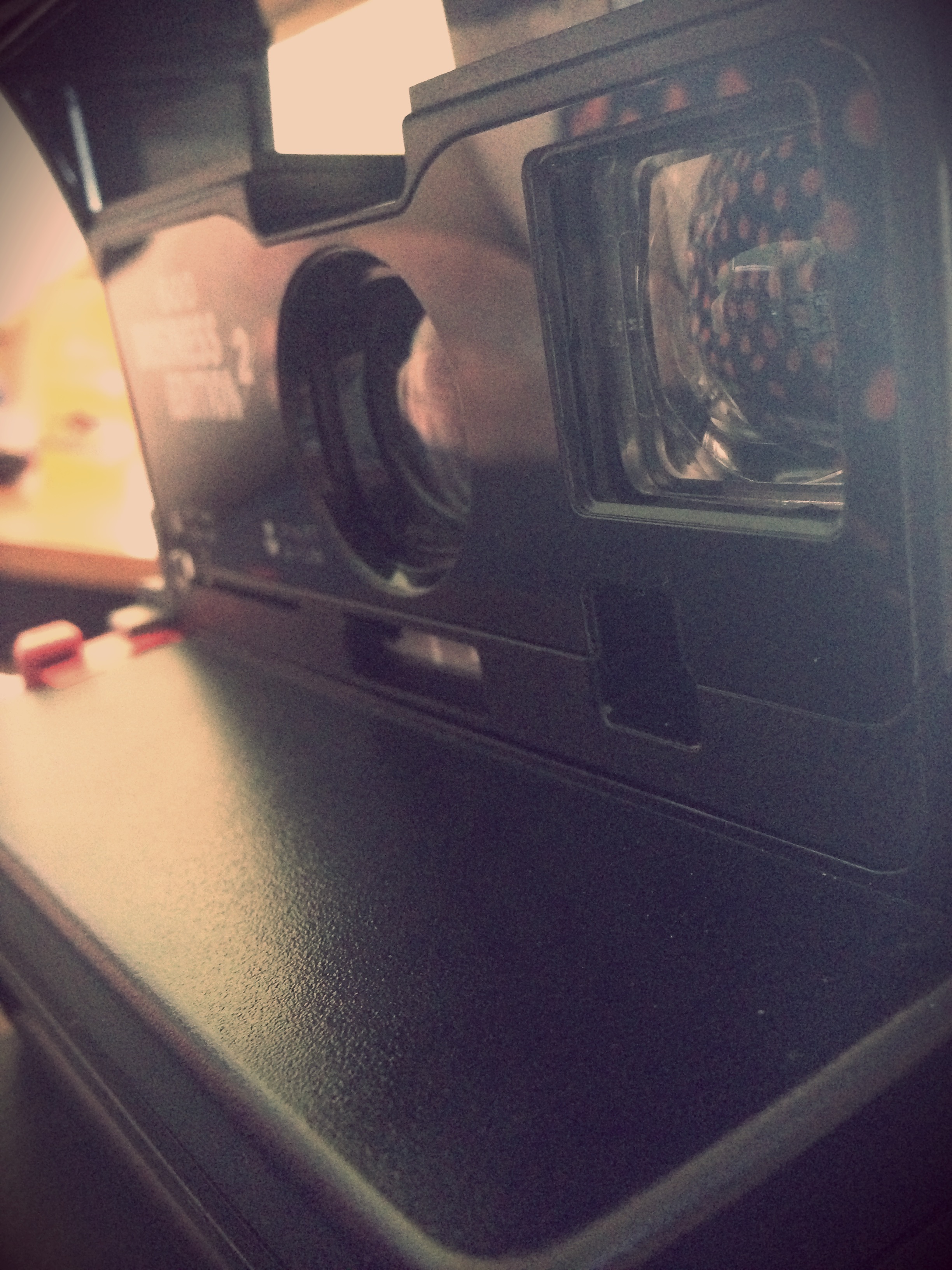
Last week, we figured out which camera is right for you. Whether or not you went and splurged on a brand-new Nikon D3X ($14000!!!) or you’re sticking with your family’s age-old Holga, you’re now probably wondering what to do with this piece of equipment in your hands. First you have to look for the power button… Well, we hope we don’t have to teach you that
Assuming the reason you’re reading this column is because you want to learn how to take good pictures, we’ll try to stay away from using the “Auto” or “Scene” functions on your camera. The first things you then need to learn are the many settings which affect how a picture will turn out. The three main settings are:
ISO: Determines how sensitive the image sensor is. In film cameras, you had to choose your film depending on what kind of shots you were planning to take. If you were into sports photography, you would buy film with a high ISO. If you wanted to go out during a sunny day and take pictures of the landscape, you would then get film with a lower ISO. Really, the only difference in the film was it’s chemical content, each one formulated to react to light differently. Nowadays, ISO changes the gain of the image sensor, or CCD, meaning it tells the camera how much of the picture to guess at. This doesn’t mean someone will be missing a head in your next group photo, but it does mean that if you set the ISO high enoughm you’ll see little flecks of colour that don’t belong. This is where the camera guessed.
To use the ISO: If you’re taking a picture out in the sun or somewhere bright, you can leave the ISO pretty low, near 100 or so. If you’re taking a picture in a dark place, you should raise the ISO so that the picture is brighter. Be warned, however: If you go too high, the picture will be grainy, looking like it’s covered with coloured sand. Test it out first.
Aperture: Have you ever seen an iPhone take a picture? It looks something like this:

That’s not actually a shutter, the way Apple uses it, but the aperture of your camera. It doesn’t snap open and closed when you take a picture, nor does it “click.” It actually stays stationary until you tell it to change, aka when you’re setting up for a shot. It controls the amount of light that gets to the CCD by widening or tightening, exactly like your iris. Also, it changes your depth of field, meaning how much of the picture is in focus. (more…)